

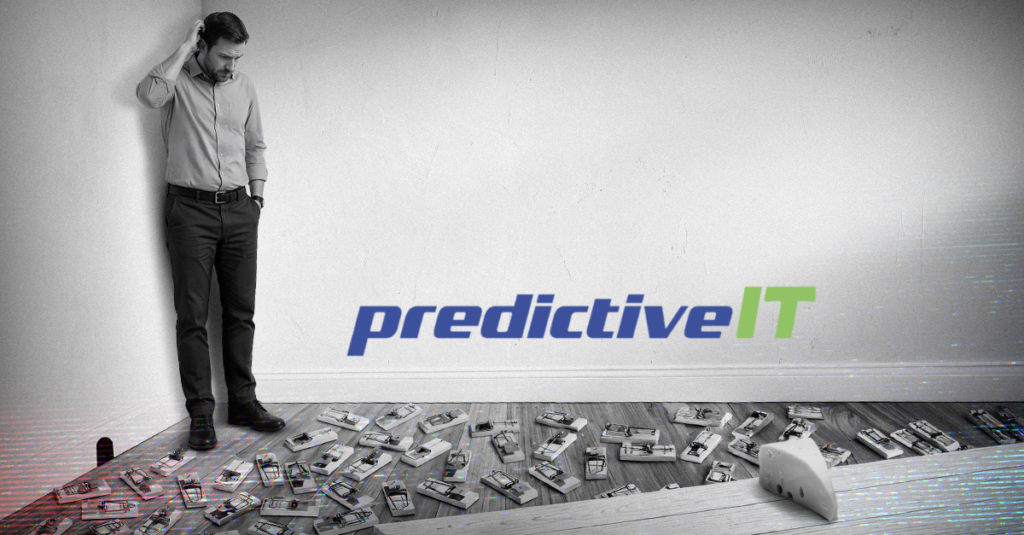
Buying another cybersecurity tool can feel like more protection for your business.
The problem starts when those tools pile up without a plan. A stack that once felt reassuring can become hard to manage, easy to misunderstand and expensive to maintain.
Before you add another product, let’s look at four ways that too many tools can make security harder than it needs to be.
1. More tools create more complexity
Most crowded security setups start with well-intended decisions. You buy one tool for email security, another for endpoint protection, another for backups and yet another for access control. Each purchase solves a valid concern.
Months later, you end up with an unexpected problem: Nobody has a comprehensive view of how everything fits together. Your team has to move between dashboards, check separate reports, track renewals and remember which tool covers which risk.
That slows down security efforts and makes it harder to spot what’s missing. If your team can’t quickly see how your tools support each other, small gaps can stay hidden for too long and cause irreparable damage to your reputation and bottom line.
2. Too many alerts can hide real threats
Alerts help only when someone can read them, rank them and take action.
When every security tool sends its own notifications, your team is stuck sorting through a constant flow of warnings. Some alerts point to normal activity, some need a quick review and some signal a real threat. The hard part is knowing which is which before the issue spreads.
That’s where alert fatigue becomes dangerous. People start skimming because the queue never seems to end. A suspicious login, a strange file transfer or a malware warning can sit too long because it looks like one more item in a crowded list.
3. Overlapping software wastes time and money
A bloated stack often hides duplicate spending. You may be paying for multiple tools that perform similar functions.
That overlap doesn’t just affect your budget. It also creates extra work for the people managing security. They have to review multiple tools, compare different reports and decide which product should handle each job.
During an incident, that confusion can cost time. If two tools show different results, your team has to stop and figure out which one to trust before they can move forward.
4. Misconfigured tools can leave security gaps
A cybersecurity tool doesn’t protect your business just because you bought it. Someone has to install it correctly, keep it updated and make sure it’s watching the right people and systems.
This is where businesses quietly lose ground. A security feature gets turned off temporarily during a fix and isn’t turned back on. A tool set up to monitor your original 10 employees may not have been updated to include the 15 you’ve hired since.
None of this shows up on an invoice. The bill gets paid, the tool’s installed and everything looks fine. The risk isn’t buying the wrong tool. It’s trusting a tool that wasn’t set up properly.
Strategy always beats quantity
Better security isn’t about buying more software. It’s about ensuring your existing tools are aligned, configured correctly and support a comprehensive security strategy.
Identify what you need to protect, where attackers could cause the most damage and which controls already cover those areas. Then decide which tools support that plan and which ones create extra noise.
Think of your security stack like a team. You don’t improve performance by adding more people with unclear roles. You improve it by giving every person a job, removing confusion and making sure everyone works toward the same goal.
The best stack isn’t the biggest one. It’s the one where every tool has a reason to be included.
Ready to simplify your security stack?
We can help you evaluate your security stack, eliminate unnecessary complexity and ensure your defenses work together to protect your business.